Digital marketing can be used to reach and gain sales from customers but still allows you to avoid traditional marketing methods. As there are so many different platforms and tools within digital marketing, it can be overwhelming to get started. This guide will give you an understanding of the key aspects of Digital Marketing, along with a practical way to begin digital marketing in 2026.
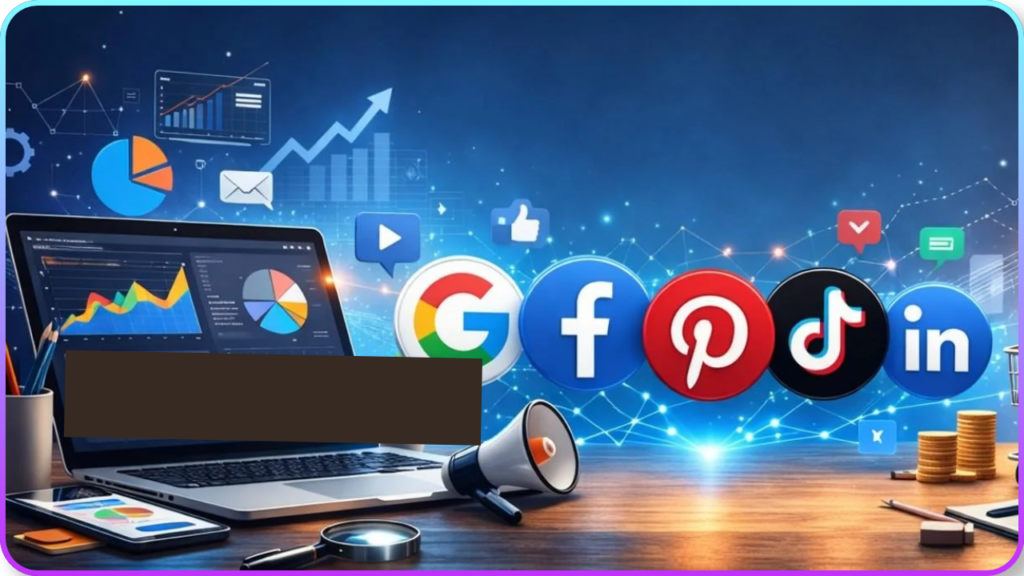
To begin digital marketing, it does not matter whether you have a large budget or are very experienced with each platform. Identify who your target audience is, decide on one objective and use only a few marketing methods. Get feedback using analytics to improve your digital marketing.
What is Digital Marketing for beginners ?
Digital marketing refers to marketing businesses, products, services and/or individuals through channels connected to the internet. This includes search engines, websites, emails, social media, video content and digital ads.
A small local gym may write useful blog posts, appear in google searches, post short videos on Instagram and send regular updates via email. All of these methods allow a business to be discovered or maintain engagement with potential customers.
Compared to traditional marketing methods, digital marketing can allow you to gather data from people. This data could include page views, click-throughs, lead generation and sales. The specific data you can gather will depend on the channel, type of tracking set up, and privacy settings and consents in place.
Why is Digital Marketing for beginners is important ?
Many customers may look online before making contact with a business, or purchasing from it. Having a well designed website, clear information on products, valuable content and good communication can make it easier for people to make decisions:
Target audience : Using the right platforms and content for your audience.
Different budgets: Start with organically generated content using free tools. Once you have a strong offer within your business, you can try using paid promotions.
Insight : Using analytics allows you to see which pages, marketing activities and channels are working towards your objectives.
Build relationships: Sending out email newsletters and creating communities on social media can help create a relationship with interested customers.
Adjust campaigns – Try different content and improve your marketing using real results.
Despite this, digital marketing is not necessarily easy or inexpensive. It can be difficult to stand out from competition. Creating quality content, paying for advertisements, and building trust within customers can all take time and effort. How successful digital marketing is will depend on the industry, product/offer, audience and how well it has been executed.
The 7 Main Types of Digital Marketing
Digital marketing is an effective way to get your message across to your target audience in order to market a product/service and develop customer relationships. Although digital marketing can seem very daunting, knowing which channels to use will help. Each channel will have a different purpose. Depending on the goals of your business and who your audience is, you may choose to use different combinations of digital marketing. Below are 7 key forms of digital marketing that all beginners should know about.
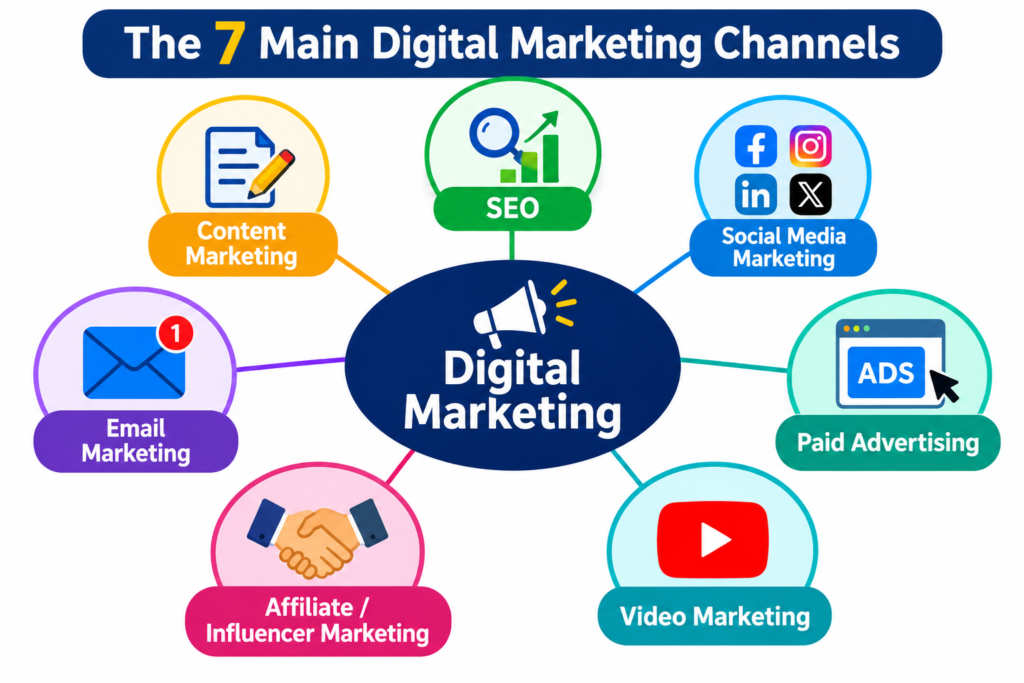
1. Search Engine Optimization (SEO)
The aim of SEO is to make sure your website appears in a search engine for particular searches. This involves creating quality content, well structured pages, easy technical access to your content, and relevant links from other websites.
For example, if you are a bookkeeper and write a helpful resource on how self-employed people should manage business costs, someone searching for this information may find you, and then look into your services.
SEO takes time to do well. Just because a page is published doesn’t guarantee it will be indexed, or rank high. No reputable service can guarantee that a page will be ranked at number one by Google. Aim to answer a specific question in more detail than a general page would.
2.Content Marketing
Content marketing is the creation of valuable content. It can be in many forms including blogs, guides, case studies, checklists, videos, podcasts and downloadable content.
A software company may create various pieces of content to support people at different points throughout their buyer journey. For example, they may produce a comparison guide, an implementation guide and help centre, to support people while researching, considering and using their solution.
Social media marketing uses platforms such as Instagram, Facebook, LinkedIn, TikTok, Pinterest, and YouTube to share content engage with audiences and meet business goals. It is important to choose the right platforms to target your desired audience with the content you can provide consistently.
A B2B software business may find LinkedIn useful. Whereas for a visually focussed home-decor brand Pinterest and Instagram may be most effective. To start with, you may just want to focus on 1 or 2 platforms. Experiment to see what works best.
4.Email Marketing
Email marketing can be used to inform your audience, keep them updated, promote products and encourage repeat business. Sending a series of welcome emails can help you introduce your business, the benefits of using it, along with directing people to helpful resources.
To build your audience, create a clear sign up form and let people know what they will get. Use a reliable email service to send your mail. Ensure that people can opt out of receiving emails and that you are respecting people’s choices. Be sure to follow any regulations applicable to your audience.
5. Pay-Per-Click (PPC) and Paid Advertising
Paid advertising allows you to reach people on search engines, social media, websites and video platforms. With PPC advertising, you will usually be charged when users click on your advert, although different payment options exist depending on the platform.
for example, If you sell accounting software, you could run some search ads. However, be sure to understand who the target audience is, what page you would like people to go to, what action you want people to take, your maximum budget and how you will measure success. Run a small testing ad first to understand if increasing spend will lead to profitable sales.
6.Affiliate/Influencer Marketing
Affiliate marketing works by rewarding partners for generating a predefined action. This could be sales or quality leads, and can be measured via tracking codes/links. Influencer marketing involves partnering with content creators, whose content and audience may align with your brand.
Both rely on trust and transparency . If you receive a reward (commission, payment, free product, etc) for promoting a product, it must be clearly stated that you are affiliated. This should be shown immediately after the promotion of the product. The requirements for this can vary between locations. the U.S. Federal Trade Commission provides guidance for endorsements and social media disclosures.
7. Video Marketing
Creating videos such as demonstrations, tutorials, explainers, interviews, live streams and short videos allows you to get your message across. However, be careful to not lose clarity and value in your content due to focus on creating high quality.
Simple screen recordings explaining how to perform a task may be more valuable than expensive promotional videos. Where appropriate, include subtitles. Get to the key point early in the video.
How to Start Digital Marketing: A Step-by-Step Plan
1. Define clear goals
What do you want to achieve? This may include increasing traffic to your website, gaining quality leads, sales, bookings or repeat sales. Be realistic in what you aim to achieve.
2. Know your target audience
Who would benefit from your product/service? What do they need? What questions are they asking? What is their budget? Where are they located? What issues are they facing when purchasing? What search terms do they use?
Interview a few current/potential customers to get an understanding of what issues they are facing, what options they have considered and what information would be useful for them to make a decision. Do not make assumptions about what people in this market want based on what you would like.
3. Research competitors and search intent
Understand what questions competitors are answering, what type of content they are creating and any gaps in content. For SEO purposes, consider performing a search using potential search terms to understand what content appears for these search terms. Consider what content (guides, product pages, videos, comparisons) appears in the search results.
Use competitor research to find gaps in content. Do not copy content directly, but provide original information, examples, steps or evidence.
4. Create basic web pages/landing pages
Make sure the content on your website clearly explains what you offer, who it is for, and what people should do next. Include contact information, make sure pages are mobile friendly and include clear CTAs (Call to Action) such as “Request a quote” or ‘Sign up’.
If you do not require a full website as yet, a simple landing page may be useful. Make sure that the content of this page is consistent with the content in your ad, email or social media post.
5. Pick 1 or 2 channels
Based on your audience, capabilities and goals, decide which channel(s) you’d like to use. A new blog may mean focusing on SEO and email marketing. A local service may mean having full business listings, useful local pages and social media. B2B companies may focus on informative content, LinkedIn marketing and targeted email marketing.
It is best to focus on creating quality content in 2 channels, than creating inactive profiles in 6.
6. Plan content
Plan content to match questions that your audience may have. Include educational content as well as information on your products, comparisons, demonstrations and addressing common objections.
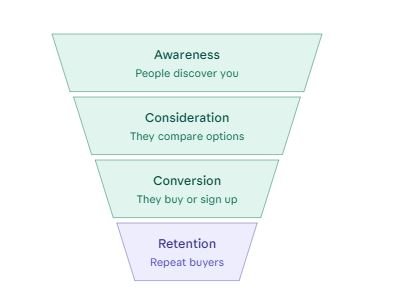
Awareness: Inform people on the problem and provide useful information.
Consideration: Give fair comparisons between different options/products/solutions.
Decision: Give information on pricing, installation, limitations, support and next steps.
Retention: Provide tutorials, updates and tips to support current customers.
7. Measure and improve
Pick a few key KPI’s to help you meet your goals. Regularly check progress and look for trends, rather than making decisions based on a good or bad day. Use the results to improve your targeting, content, landing page or offer.
Essential Digital Marketing Tools for Beginners
We recommend starting with just a few tools. Choose tools that will help fix current problems.
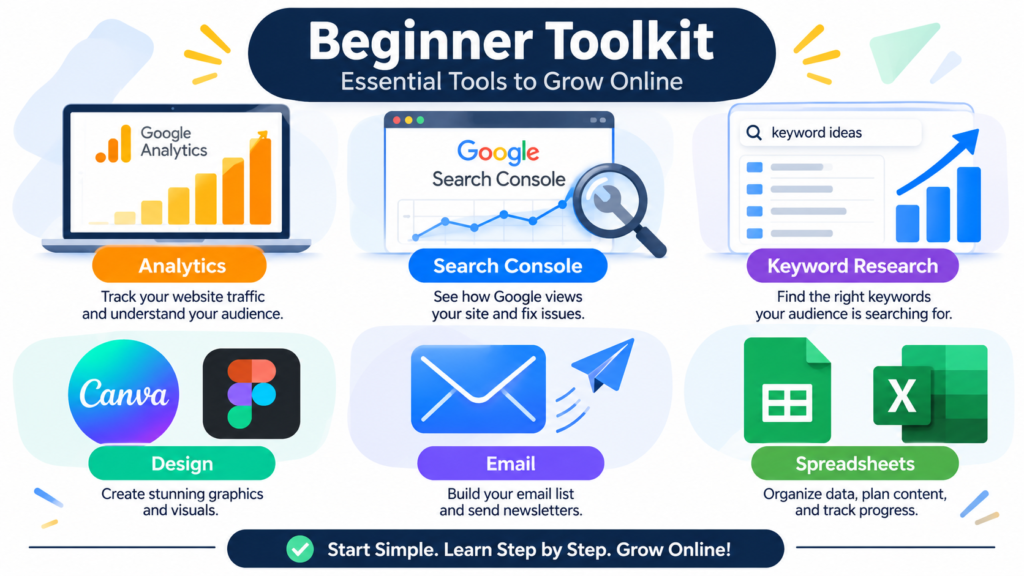
- Google Analytics Understand how people interact on your website/app. Ensure key interactions are being captured.
- Google Search Console : Understand how your website is performing in Google Search. Diagnose any indexation issues and understand what searches and pages people are viewing.
- Google Keyword Planner: Gain keyword ideas for advertising within Google Ads. The figures given for volumes and forecasts are only estimations.
- Canva: Create social media content, presentations and basic marketing content. Be sure to check the licensing available for assets if using them in commercial content.
- Email Marketing Platform: Gather opt-in subscribers and create email campaigns. Consider features provided in automation, deliverability, integration options and price points.
- Spreadsheet: Track objectives, publish date, cost and results of campaigns. Using a good spreadsheet system can be enough at the start.
Tool Features, free versions and pricing may vary. Please ensure you check each providers official website before committing to subscriptions/allocating budget.
How to Use AI in Digital Marketing
AI tools can be used to generate ideas, structure content, condense research, create different versions of copy and organise questions from customers. The AI generated content should be checked by a human to make sure it has appropriate knowledge within it. you can check best AI tools for digital marketers here
An AI assistant could be used to create ten articles based on the questions customers have asked. However, ensure facts are correct, choose the best idea to develop, include examples and proof-read to ensure accuracy and clarity.
Do not use un-checked AI content as factual research. Ensure figures, features, legal statements, references and dates are all correct. Avoid entering confidential customer information into tools unless you fully understand and are comfortable with how the tool handles data.
How Much Does Digital Marketing Cost?
It depends on what you pay for. This could be paying freelancers/ agencies, software, videos, or advertising.
For people just starting out, you can keep costs low by building a basic website, finding free learning resources, producing organic content and using free analysis tools. However, even though some things are free, there may be costs involved as you will be spending time, requiring skill, and paying for web hosting, design and content creation.
Before spending money on paid advertising, consider how much revenue you can make from generating leads/sales. Be sure to calculate the cost of products, delivery, charges, returns and any other relevant expenses.Set a test budget you can afford to lose while learning.
Common Digital Marketing Mistakes to Avoid
- Trying to reach everyone: A specific audience makes it easier to create relevant messages.
- Selecting inappropriate channels of communication for your audience: Choose according to consumer behaviour and capability within your business
- Expecting instant SEO results: Not understanding that SEO takes time and never guaranteed.
- Creating content without an objective: All campaigns should have a goal.
- Buying followers/likes: Adding followers/likes doesn’t mean more customers or trust.
- Ignoring mobile users. Ensure that content, forms and emails are optimised to be mobile friendly.
- Not measuring conversion. High traffic and likes does not mean good conversion.
- Using misleading claims: Be honest about what products you offer, what results you can deliver, testimonials and paid partnerships.
Free Resources to Learn Digital Marketing
Begin by using the free official training resources. Build up your knowledge by working through a practical project.
- Google Skillshop – training to get the best out of Google Ads, Google Analytics and other Google marketing tools. https://skillshop.withgoogle.com/
- Google Search Central : SEO Starter Guide: Official guidelines to help search engines better understand the website. https://developers.google.com/search/docs/fundamentals/seo-starter-guide
- Google Analytics: Support and training resources. https://support.google.com/analytics/
- HubSpot Academy : training and certifications for marketing, content creation, email and more. https://academy.hubspot.com/
- Meta Blueprint : training resources for marketing using Meta tools. https://www.facebook.com/business/learn
Be aware that courses and interface may change. Before taking the course be sure to check all requirements, who it is available to and what certification you get from taking it.
Conclusion
Getting started with digital marketing may seem quite complicated, but you don’t have to jump in with both feet.
Start by focusing on one area of digital marketing by learning the basics . Ensure you understand who your target audience are. Create useful content and monitor your results. Once you get more experienced try using different strategies. Utilise AI tools and look to improve your campaigns depending on what is working.
As technology and customer behaviour is always changing within digital marketing, it is important to continuously develop your knowledge. Be aware of trends within the industry, and be flexible with your methods.